Obstacles to critical thinking
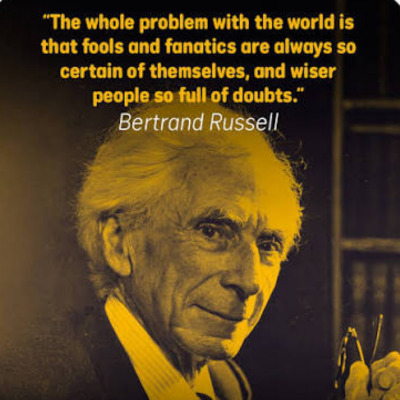
The whole problem with the world is that fools and fanatics are always so certain of themselves, and wiser people so full of doubts.
(Bertrand Russell)
Despite the advantages of critical thinking, there are various obstacles that can prevent us from it. We are, on one hand, slowed down by our own mind, and on the other hand, our emotions and our environment try to influence us.
Cognitive effort — why we are often mentally lazy
Thinking is exhausting. It costs time, concentration and mental energy. Our brain is an amazingly powerful organ, but at the same time also a very economical one. It constantly searches for ways to save energy, not out of laziness in the moral sense, but for efficiency reasons. Therefore, it prefers simple, quick judgments and routine reaction patterns over complex analysis and conscious reflection.
We could say: Our mind is lazy — or, put more kindly: it is economical. It prefers to fall back on familiar patterns of thought, intuitions and automatisms rather than undergo the effort of deep reflection. In many everyday situations this makes perfect sense: we do not have to consciously analyze every time how we open a door or answer a simple question.
This principle was illustrated by psychologist Daniel Kahneman1 with his model of System 1 and System 2.
System 1 works fast, automatically and emotionally. It helps us react immediately, for instance when we recognize danger or need to assess a familiar situation.
System 2, by contrast, is slow, deliberate and analytical — it comes into play when we really have to make an effort, e.g. with complex decisions, logical inferences or moral dilemmas.
The problem is: Our brain prefers System 1, even when System 2 would actually be appropriate. Out of convenience or time pressure, we rely on first impressions, stereotypes or learned opinions without questioning them. In this way, we avoid cognitive dissonance2, avoid doubt and spare ourselves unpleasant insights. But this convenience has its price: It can prevent us from making well-founded judgments, recognizing complex connections or noticing our own thinking errors.
In short: our inner power-saving mode may relieve us in the short term, but in the long run it often stands in the way of critical thinking — especially in a world that is becoming ever more complex and challenges us to act in a thoughtful, reflective way.
Overconfidence — why we often think we are smarter than we are
A major obstacle to critical thinking is our tendency toward overconfidence. We tend to overestimate our knowledge and our abilities — especially when we have only superficial knowledge of a topic. It is precisely ignorance that can lead to inflated self-confidence (Donald Trump), because we lack the knowledge needed to recognize our own limits.
This phenomenon is known as the Dunning-Kruger effect. People with low competence frequently underestimate the complexity of a topic while simultaneously overestimating their own judgment ability. Conversely, competent people are often aware of their uncertainties and therefore more cautious in their statements.
We often see this in everyday life: those who form an opinion quickly often come across as particularly convinced — whereas well-founded knowledge usually goes hand in hand with more caution and thoughtfulness. Unfortunately, in public communication self-assurance is often valued more highly than nuance. Watch a talk show and you know what I mean.
This overconfidence not only makes it harder to recognize our own thinking errors, but also complicates dialogue with others. Those who consider themselves "smarter than others" listen less often and question their own convictions less frequently.
We will return to the Dunning-Kruger effect later in the context of cognitive biases.
Cognitive biases - we let ourselves be tricked
Our thinking is influenced by numerous systematic biases. Our mind tricks itself, as with the infamous confirmation bias (the tendency to only seek information that confirms our existing beliefs) or the anchoring effect much used by manipulators (excessive influence by information presented first).
Social influences - we let ourselves be manipulated
Humans are social beings. Even as children, we depend on having rules and basic values conveyed to us. They give us orientation, security and make coexistence in a community possible in the first place. Without such a rule system, we could neither develop a sense of right and wrong, nor build a stable self-image or sense of belonging to society.
But this necessary formation also has a downside: it makes us susceptible to social influences that can steer or even restrict our thinking. Thus it can happen that we adopt norms, opinions or authorities without questioning them — not out of conviction, but out of habit or the desire to belong.
The family as the first instance of shaping
In the family, fundamental values and worldviews are passed on. These early influences often shape our thinking unconsciously — what is "normal", "right" or "true" is rarely questioned, because it is linked with emotional attachment and trust. Whoever thinks against the family's convictions risks tension or even exclusion.
School and state as formal socialization institutions
The education system and state institutions also convey values and worldviews. They establish certain topics, perspectives and interpretations as "universally valid" — and whoever deviates from them runs the risk of being labeled disruptive, naive or ideological. Critical thinking that questions fundamental assumptions often finds little room, especially when it concerns authorities or existing systems.
Group pressure and the desire for belonging
A strong social influence comes from the need to be part of a community. People frequently adapt to the opinion of the majority (the herd instinct 🐑🐑🐑), even when they have inner doubts. Group pressure, conformity pressure and fear of rejection or ridicule lead many to prefer silence or adapt their own thoughts rather than critically engage with the prevailing opinion.
Belief in authority and manipulation
On top of this comes an often deeply rooted tendency to trust authorities — whether in the family, at school, in the media or in politics. Whoever is perceived as an authority is given the benefit of the doubt, even when their statements are unfounded or questionable. This tendency can be deliberately exploited: through manipulation, propaganda or subtle emotional appeals that undermine critical thinking.
Emotional factors
Strong emotions can overlay rational thinking and lead to hasty or distorted judgments.